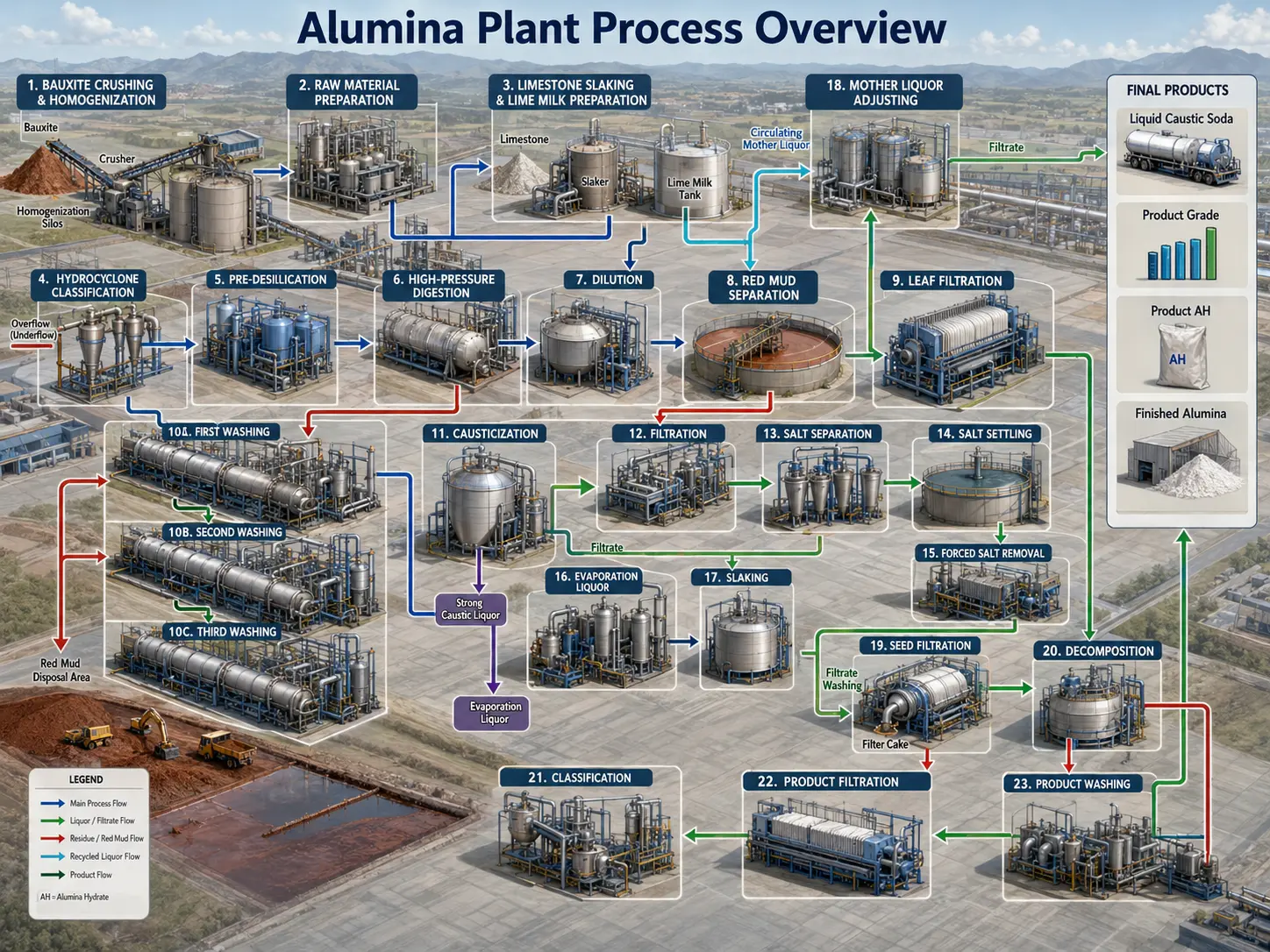
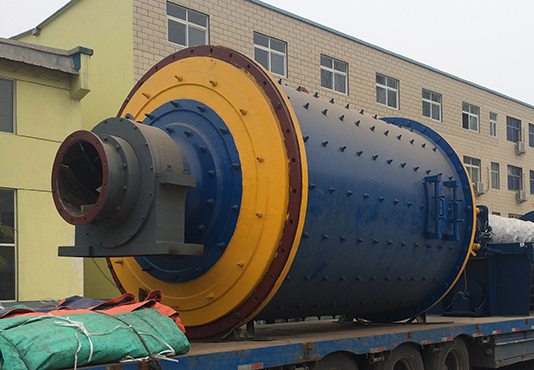
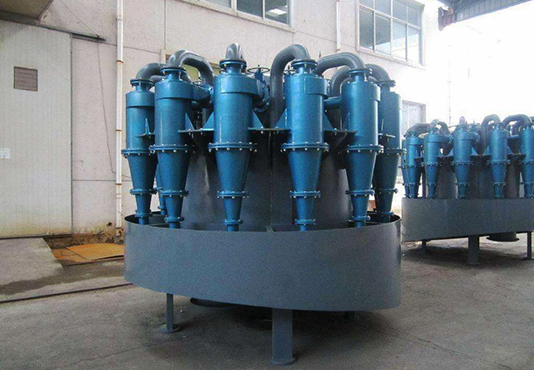
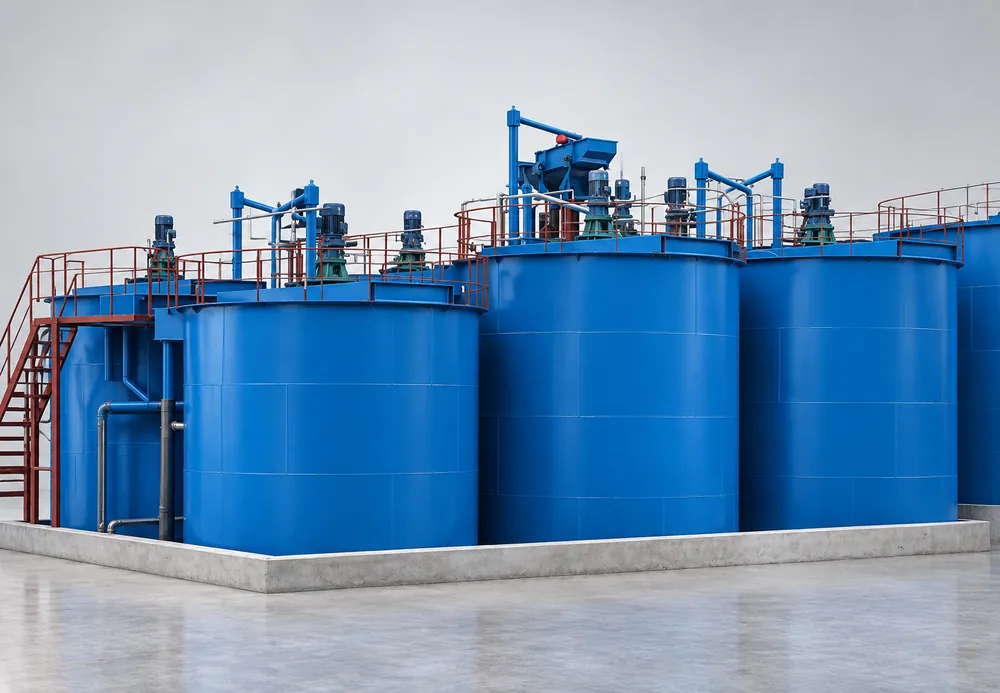
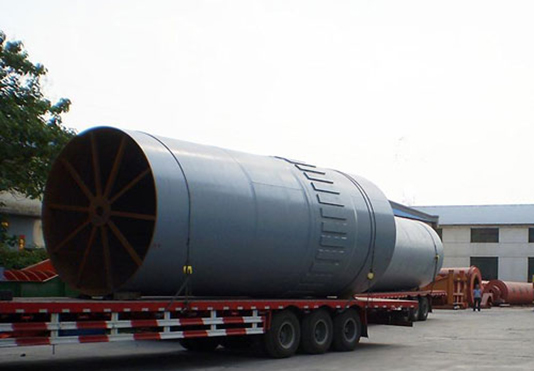
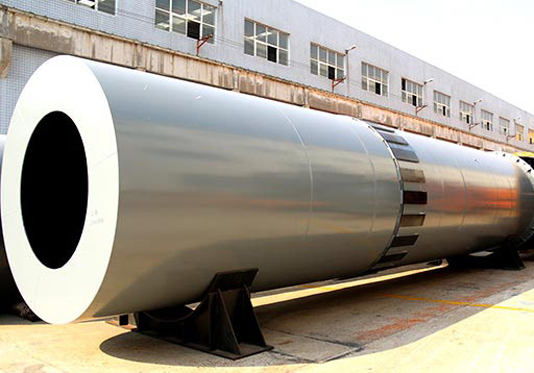
The alumina production line converts bauxite ore into alumina through crushing, raw material preparation, digestion, separation, decomposition, filtration, evaporation, and calcination.
Energy Efficient
Optimized raw material grinding, slurry preparation, evaporation, and calcination help improve production efficiency and reduce unnecessary energy consumption.
Automated Control
The production line can be configured with controlled material conveying, slurry preparation, digestion, decomposition, filtration, evaporation, dust collection, and calcination systems
Modular Design
The process can be designed according to the selected route, including sintering production line, Bayer process production line, or combined alumina production line.
Complete Process Flow
01
Crushing
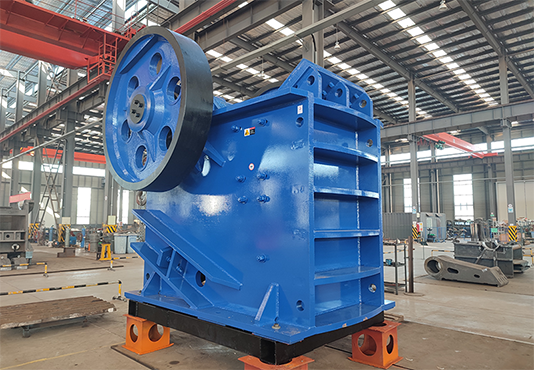
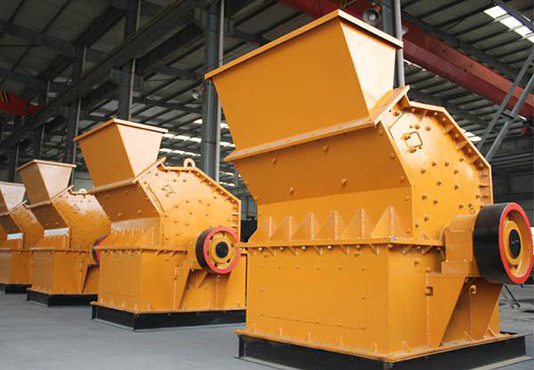
Bauxite ore is crushed before entering the alumina production process.
02
Homogenization
The crushed bauxite is homogenized to improve raw material uniformity.
03
Raw Material Preparation
The homogenized material is prepared and mixed for the next processing stage.
04
Hydrocyclone Classification
The prepared slurry is classified by hydrocyclone to control particle size.
05
Pre-desilication
Silica-related impurities are reduced before digestion.
06
High-Pressure Digestion
The classified slurry is digested under high pressure to dissolve alumina-bearing components.
07
Dilution
The digested slurry is diluted to prepare it for separation and downstream treatment.
08
Red Mud Separation
Red mud is separated from the slurry, and the liquor continues for further processing.
09
Seed Filtration and Decomposition
The liquor is filtered and decomposed to promote alumina hydrate formation.
10
Classification to Final Product
The product stream passes through classification, product filtration, product washing, filter cake handling, and finishing to obtain finished alumina.
Download Complete Process Documentation
Get detailed flow diagrams, equipment specifications, and design guidelines
The file states that about 4 tons of bauxite ore produce 2 tons of alumina and then 1 ton of electrolytic aluminum.
3 Routes
Flexible Production Process Selection
The production line can be arranged as sintering process, Bayer process, or combined alumina production process
Wide Application
High-Value Industrial Material
Alumina can be used for pure aluminum refining, semiconductors, glass, metal products, refractory materials, abrasives, polishing agents, and artificial gemstones.
Complete System
Full Production Line Configuration
The process can cover crushing, conveying, grinding, slurry preparation, digestion, separation, filtration, evaporation, and calcination.
Success Stories
Want Similar Results for Your Mine?
Our experienced engineers can design a custom solution to increase your processing capacity and reduce operational costs